A comb is a small construction
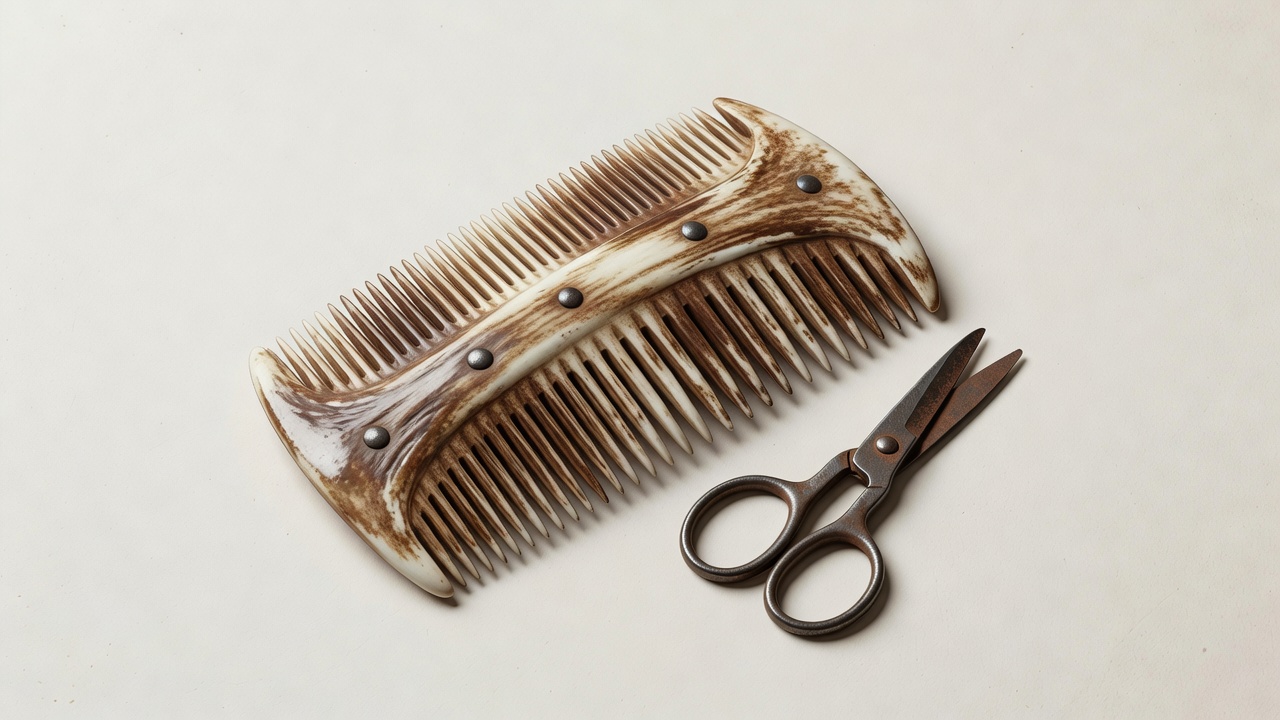
Many Viking Age combs were composite objects rather than a single piece cut into teeth. Makers assembled tooth plates between supporting side plates and fastened the structure with rivets. Antler was a significant raw material, although material, form and construction vary. Decorative lines and shaped profiles could turn a utilitarian implement into a carefully finished possession.
Manufacturing traces help reconstruct the sequence of work. Saw marks can reveal how teeth were cut; unfinished pieces and waste can identify production more securely than a finished comb alone. In settlements such as Ribe and Hedeby, craft evidence helps place grooming tools within an economy of raw materials, specialist labour and exchange. A comb is therefore evidence of both personal care and manufacture.
Raw material studies can also raise questions about supply. Identifying the animal material and comparing it with regional availability may help investigate movement. These arguments depend on actual analysis, not simply on a modern impression that all pale combs are bone. Museum descriptions sometimes preserve older identifications, so revised research may matter.
Wear suggests use, not a timetable
Broken teeth, polishing and repairs can indicate an object's working life. A case may suggest that its contents were carried or protected. The presence of a comb in a settlement or burial supports an interest in managing hair, but it does not establish a universal daily routine. Nor does it tell us automatically whether the object was shared, inherited or made for one owner.
Fine teeth may have served close grooming and the removal of unwanted material. Specific claims about delousing are strongest when supported by direct associations or specialist study. It is tempting to transform every tool into a tidy modern category, but historical users could apply one implement to several tasks. We should preserve that flexibility unless the evidence narrows it.
Evidence
A repaired comb remained worth maintaining after damage.
Interpretation
Its owner followed a particular daily hygiene schedule or valued it for one known reason.
Hair survives unevenly
Hair is much less consistently preserved than metal or antler. Rare preserved bodies, images and descriptions can add detail, but each belongs to a specific place and date. The Danish Bronze Age Egtved burial, for example, belongs to a much earlier setting than the Viking Age. Its evidence should not quietly become a portrait of somebody living thousands of years later.
Small figures, carved images and embroidered scenes can suggest silhouettes or arrangements, but their scale and conventions limit precision. A line read as a braid might also involve stylisation, clothing or an uncertain feature. Modern reenactment can test whether an arrangement is physically practical; it cannot establish that the arrangement was historically widespread merely because it works.
The strongest reconstruction explains its decisions. It identifies the source image or find, specifies the date and region, and marks the steps supplied by modern judgement. Elaborate shaved sides and intricate braids familiar from screen drama should therefore be described as costume design unless tied to appropriate evidence. They are not a default Scandinavian hairstyle.
Read implements and texts together
Shears, tweezers and small picks sometimes appear in discussions of personal grooming. Their interpretation depends on form and context; some cutting tools had several domestic or craft uses. An object labelled as a toiletry implement is a starting point for inquiry, not permission to reconstruct a complete grooming routine around it.
Written accounts add voices, but they are not neutral recordings. Ahmad ibn Fadlan's account of the Rus on the Volga in 922 is often quoted in discussions of washing. It describes a particular encountered group through an observer's perspective. It should not be treated as a survey of households across Scandinavia. The medieval account associated with John of Wallingford, often invoked for Danish grooming habits in England, also requires attention to authorship, transmission and purpose.
Comparison is more useful than choosing one quotation as the final verdict on whether “the Vikings were clean.” Tools show material investment in grooming; texts describe selected encounters and moral judgements. Neither supports a simple ranking against modern hygiene standards. Together they encourage a better question: which practices can be established for which people, in which circumstances?